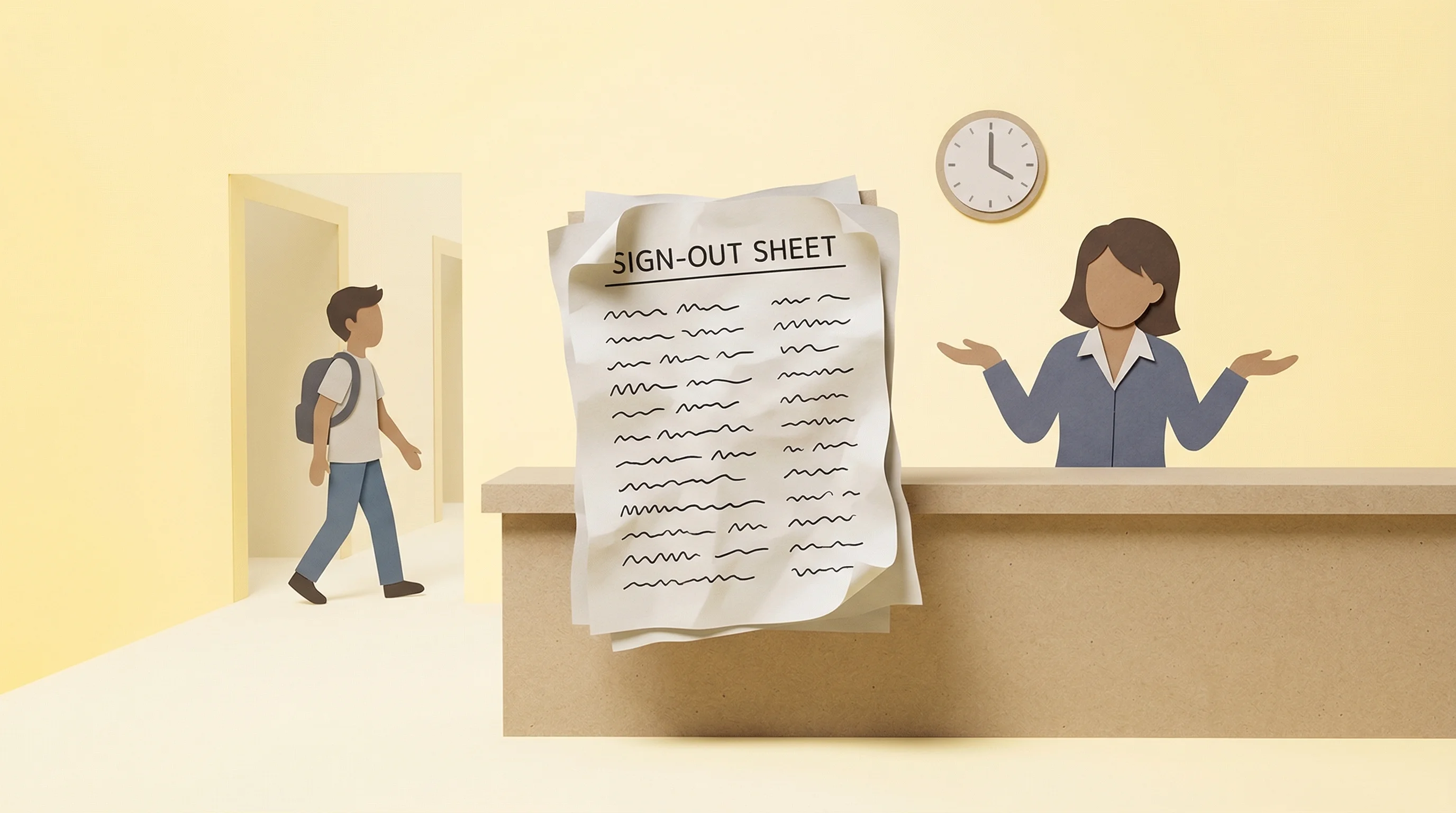
When schools introduce digital out-of-class pass records, families may reasonably want to understand what is changing, why it is being introduced, and how student information will be handled. Clear, proactive communication gives the school community the information it needs to ask questions and understand the new process.
Start with the questions families are entitled to ask
Families may ask about safety, dignity, medical access, privacy, retention and fairness. A digital out-of-class pass can support a consistent school process, but it does not prove duty-of-care compliance or remove the need for local policies and professional judgement.
Communicate before rollout, provide a contact point and treat questions as useful feedback. A newsletter paragraph, FAQ or information-session mention can explain the purpose and limits of the record without promising a particular family response.
The framing that works
Use accurate language that the school's policy and product configuration can support. Here are three starting points to adapt:
1. Duty of care framing
"As part of our ongoing commitment to student safety and clearer duty-of-care records, we've introduced a digital out-of-class pass system called Vero. This replaces our previous paper-based sign-out process with a consistent record of teacher-created passes during school hours."
This framing explains the operational purpose without claiming the software itself satisfies a legal obligation.
2. Bathroom access framing
"We're pleased to announce that our bathrooms will remain accessible under the school's usual procedures. We've introduced Vero, a digital out-of-class pass system that records teacher-created passes without GPS or cameras."
Use this only if it accurately describes the school's facilities and access policy.
3. Emergency preparedness framing
"During a drill or emergency, authorised staff can review a central list of active Vero passes, including the selected destination and associated time. We use that list alongside rolls, headcounts and our emergency management plan."
This framing states what the list contains without presenting recorded destinations as verified physical locations.
Sample parent communication
Here's a template you can adapt for your school newsletter or parent communication:
Dear families,
Starting [date], we're introducing Vero, a digital out-of-class pass system that replaces our paper-based sign-out sheets. When a student needs to leave class (for the bathroom, sick bay, the office, etc.), their teacher creates a digital pass that records the student's name, selected destination, and time.
This change improves our school's ability to:
- See active passes and recorded destinations in one authorised view
- Respond quickly in an emergency by identifying students who are out of class
- Keep all facilities, including bathrooms, open and accessible
- Add timestamped pass context to appropriate family conversations
Vero does not use GPS, cameras or passive device tracking. It records a school-defined pass event when authorised staff create a pass. The primary application database is in Sydney, supporting provider locations are disclosed publicly, and the privacy program is designed around the Australian Privacy Principles.
If you have any questions, please contact [name/role].
Addressing common parent questions
"What exactly is being recorded?"
Vero records a limited event when authorised staff create a pass: the student, issuing staff member, selected destination and associated times. It does not use GPS, cameras or student-device software, and it does not verify a student's physical location. Schools should explain their own purpose, access and retention rules alongside the product's limits.
"Can I see my child's data?"
Schools can export authorised pass records. Whether and how a record is provided to a parent depends on the school's policies, applicable privacy or information-access requirements and the context of the request.
"What about my child's privacy?"
Vero's primary application database is hosted in Sydney and school and role controls limit access to pass records. The public privacy notice lists the supporting providers that process information to deliver the service. Vero does not sell school information or use it for advertising or AI/ML.
"My child has a medical condition that requires frequent bathroom access."
The school should handle medical adjustments through its existing authorised process. Avoid creating medical labels or automated inferences in a pass register; where a record needs context, limit access and document only what is necessary.
What to evaluate after communication
Track your own community response rather than relying on a generic outcome claim:
- which questions families ask most often
- whether the purpose and limits of the record are understood
- which privacy or access concerns need a clearer answer
- whether records add useful context to family conversations
The goal is clear, proportionate communication: explain what Vero records, what it does not track, who can access information and how families can raise a concern.