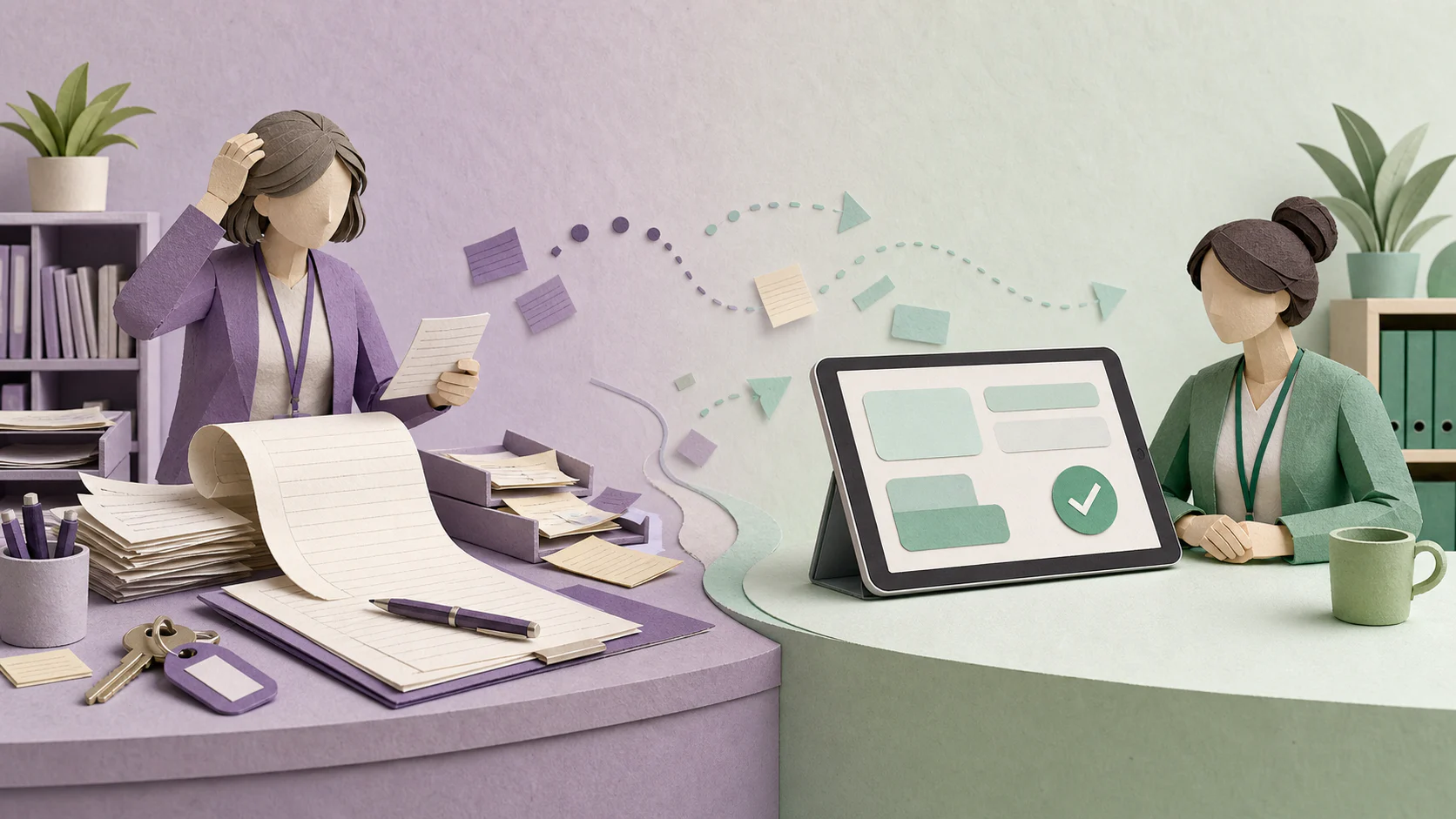
A clipboard by the door, an exercise book on the teacher's desk, or a sheet with columns for name, time out, destination and return: paper sign-outs are a familiar, low-cost way to record students leaving class. Their value depends on how consistently the school uses and retains them.
This planning guide comes from Vero, founded by Australian teachers Scott and Kim Letts. It describes workflows to evaluate, not measured customer outcomes. Updated 23 September 2026.
Paper can be effective in a small, local workflow, but it is harder to share, aggregate and search across a school. The relevant question is whether the process supplies the information your staff need at the right time.
Here is an honest, side-by-side look at how paper sign-out sheets compare with digital out-of-class pass systems — what each does well, where each falls short, and which approach gives your school the visibility it actually needs. For a full breakdown of digital pass capabilities, see Vero's features.
How paper sign-out sheets work (and where they break down)
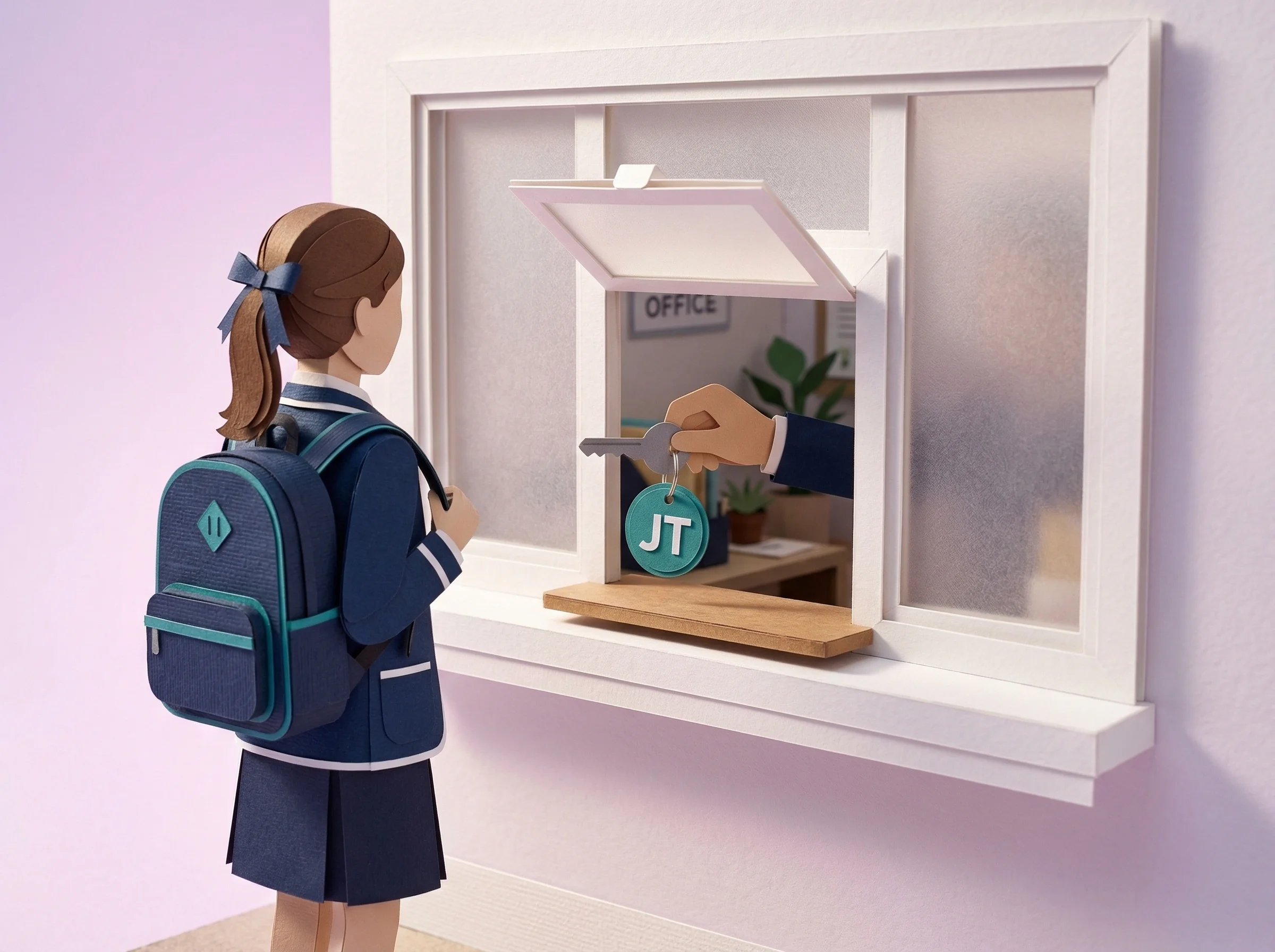
The process is simple. A student raises their hand, the teacher nods, and the student walks to the clipboard by the door. They write their name, the time, and where they are going. When they return, they write the time back in. That is the entire system.
In theory, it works. In practice, the problems stack up quickly:
- Entry quality varies. Student-entered and staff-entered sheets have different verification needs. Check whether names, destinations and times are legible and consistently recorded.
- Returns need a routine. A paper sheet or a digital record can remain open if the return is not recorded. Agree who closes the record and how staff handle exceptions.
- Retrieval needs a process. Paper records need an agreed storage location, access rules and retention period if authorised staff will need them later.
- No shared open-pass view. If a student does not return, a paper sheet in the classroom may not be visible to authorised central staff.
- Aggregation is manual. Reviewing patterns across classrooms means collecting and counting entries. Measure that effort if school-wide reporting matters to your team.
Paper sign-outs can provide a local record of intent. Their limitations are access, consistency and school-wide aggregation.
How digital out-of-class passes work
With a digital out-of-class pass system, the process can shift from student self-reporting to a teacher-created pass record.
Here is the typical flow: a student requests to leave, the teacher creates a pass on a school-authorised device and selects the student and destination. The pass becomes active for staff with the appropriate access. When the student returns, the pass is closed and the associated times remain in the school's record under its retention settings.
For administration, a dashboard can show open pass records, recorded destinations and elapsed time in one authorised view. Reports can make repeated, extended or time-of-day patterns easier to review. The system does not verify a student's physical location.
self-reported · time back missing · gone by Friday
teacher-created · timestamped · still there in 2027
A direct comparison
Here is how the two approaches stack up across the metrics that matter most to school leaders:
The cost difference is real. Paper has little direct software cost and digital does not. The decision is whether central visibility, search and reporting justify the subscription and change effort for your school. A one-term pilot lets you test that question against an agreed baseline.
When paper might still work
There are schools where paper sign-out sheets are genuinely sufficient. If your school has fewer than 50 students, a small number of classrooms, and admin who can review most records from the front office, a paper system may cover your needs. The volume is low enough that manual record-keeping is realistic, and the data gap is small enough that it does not create a meaningful risk.
For a larger or distributed campus, the limits of paper may become more material. Evaluate how quickly authorised staff can retrieve current and historical records, and whether the process is used consistently.
Run the same three tasks with both processes
- Create and close a pass. Use the devices and normal classroom routine your staff will actually use. Record the steps and interruptions, not just the fastest demonstration.
- Find a completed record. Ask an authorised colleague to retrieve the approving teacher, recorded destination and times. Compare the time taken and what information is missing.
- Handle an exception. Walk through an overdue pass, a missed return and a temporary network interruption. Write down the school's fallback procedure and who follows up.
If separation is part of your workflow, also test Vero's staff-defined separation warnings: another named group member's active pass triggers a warning, and the teacher can wait or override with a logged reason. It is not a hard block or a rule about bathroom capacity.
For a product-specific decision, use the Vero versus paper comparison. For the budget and approval process, use the business-case guide and pilot scorecard and published pricing.
The real question
The question is not whether paper sign-out sheets work in the abstract. It is whether the process gives your school the visibility, access and records it needs under its own policies. Neither paper nor digital records prove duty-of-care compliance by themselves.
If a parent asks "Where was my child at 11:15am last Tuesday?" — can you answer with confidence?
Measure the retrieval time with your own process. A digital system makes a teacher-created pass record searchable, while the result remains limited to what was recorded.
Vero was built for Australian schools that need a shared open-pass register, searchable records and reporting without GPS. If you are weighing paper against digital, book a 20-minute walkthrough and compare the workflow with your current process.